

Overview
Companies often need a financial checkup to know how their business is doing and need solutions when market forces start to shift. Scotiabank is right there with clients when they need it most by offering solutions to help them operate more efficiently and effectively. Sales associates at Global Transaction Banking were facing the grueling task of putting together financial assessments called treasury reviews, which would take up to 10 business days to compile. They often have to jump between 5 different apps and platforms to find information, which frustrated sales associates who simply want to execute their role of being advisors and initiate client conversations. The solution I came up with demonstrates the use of creative problem-solving and user experience design to speed up the reconciliation time and open more capacity to talk to clients.
Problem Statement
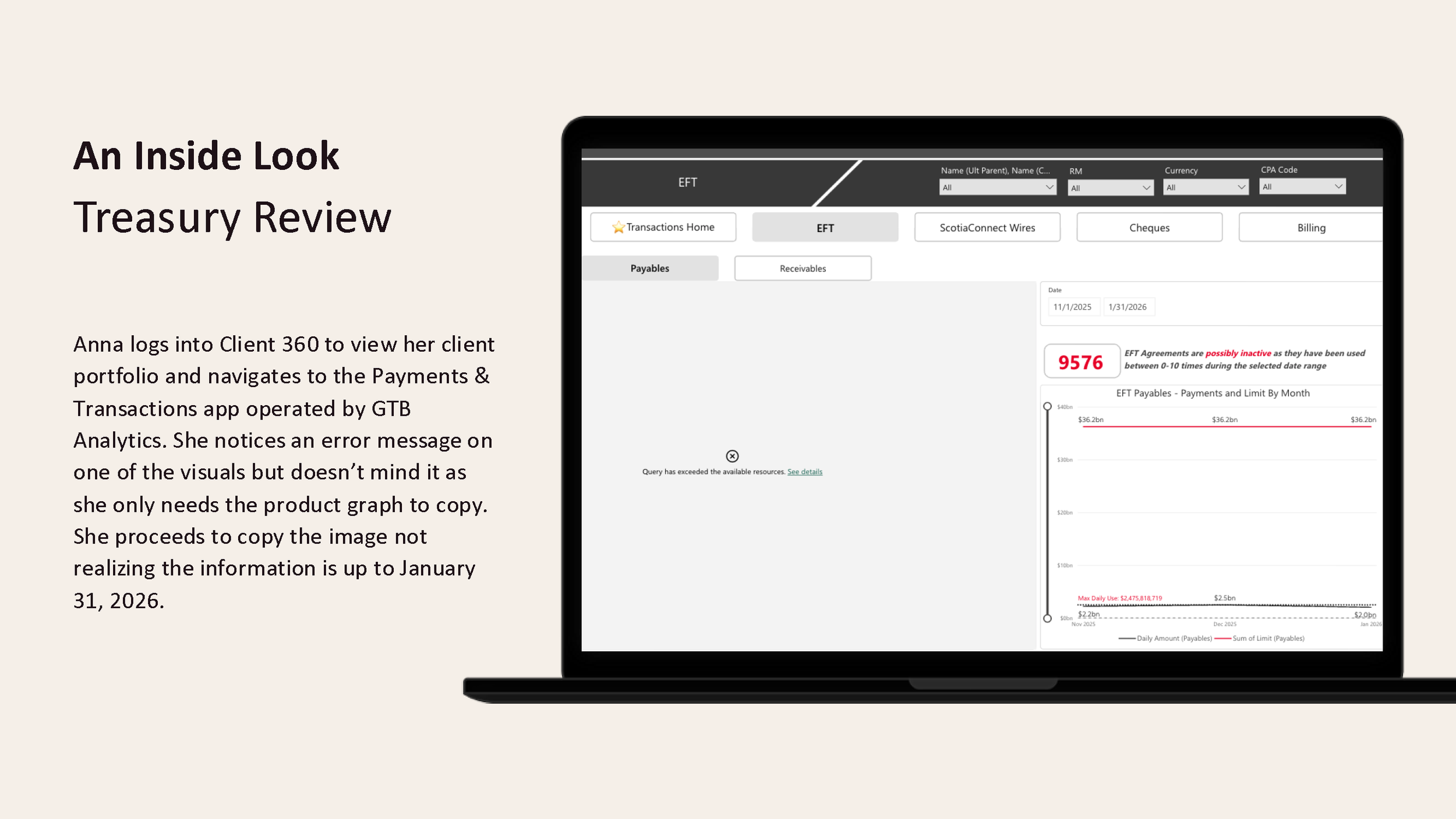
When sales associates attempt to put together a presentation on a business client’s (e.g., a company or legal entity) financial wellness, they access several different platforms, one of them being Customer 360, a data platform powered by Microsoft Power BI technology that provides market research analytics about Scotiabank clients. Within the platform, there is an existing application called ‘Payments & Transactions’ that included primarily transaction volumes on a limited number of products & services.
Due to limited data available by its design, the application created friction with sales associates who attempt to reconcile information about their clients in a timely fashion to prepare for upcoming client meetings. The next step would be to navigate to other available platforms and channels to reconcile the data & insights (e.g., looking at past bank statements, searching up transaction history, consulting with business operations, etc.).
To put it simply, sales associates were attempting to reconstruct a story about a business client’s banking experience and evaluating their performance to make recommendations to improve their business with us.
“We’re sales people, not data analysts. This isn’t and shouldn’t be part of our job. Every minute and hour spent doing this is lost time spent talking to clients. We’re unable to compete against our competitors who have this process more streamlined and have an advantage over us. ”
Goal Statement
My application Client Wellness allows users transpose the visuals into their PowerPoint deck which will help sales associates save time to get to the stage of talking to clients. We measured the success of the app by the number of client interactions, the amount of time spent per day, and the number of treasury reviews put together per week.
User Research
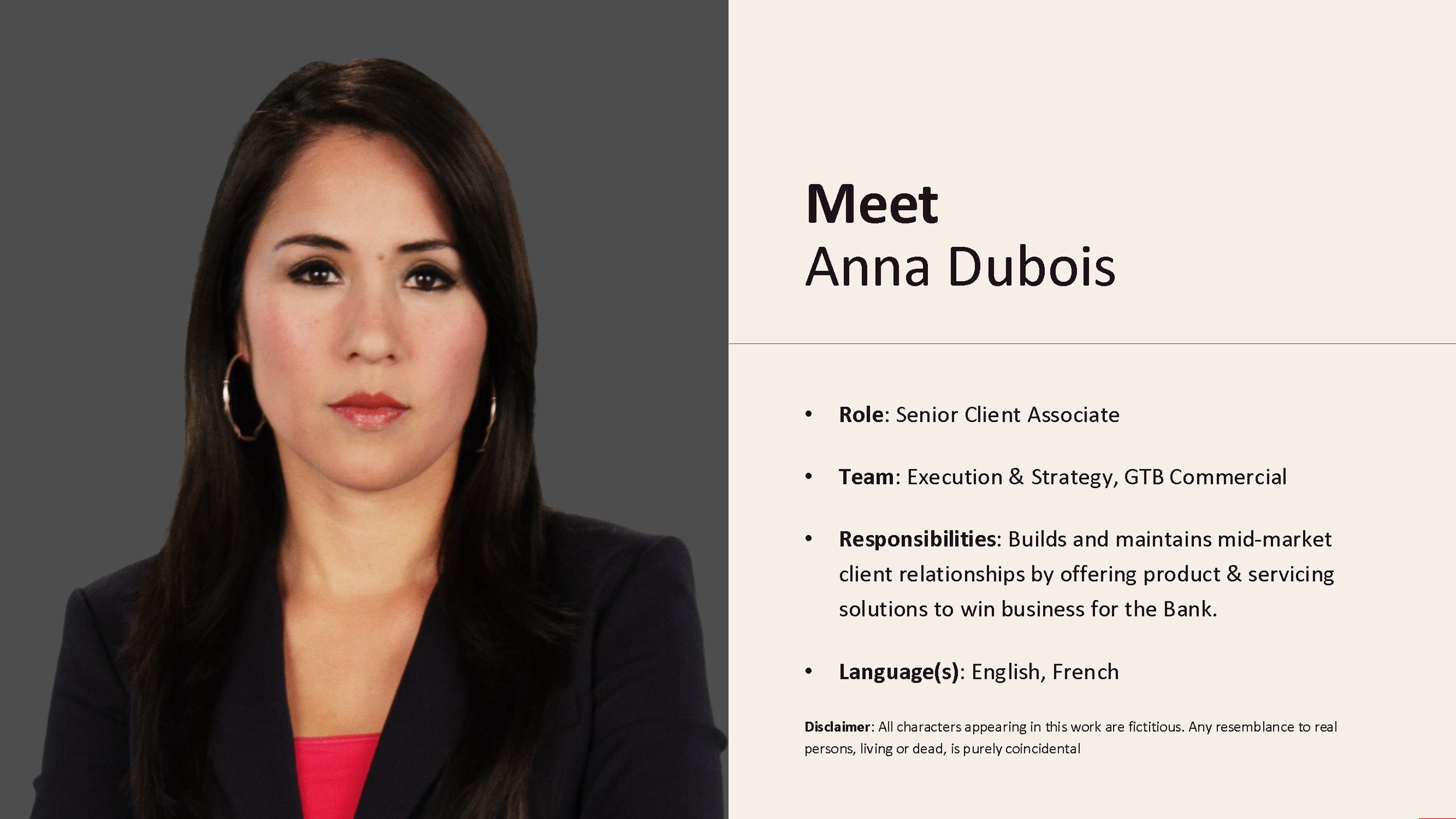
I interviewed the sales associates to learn more about their role and how they play a pivotal part in forging client relationships by understanding their business needs and recommending products & solutions to address their banking concerns.
Their job often relies on making informed decisions in real-time on where to allocate their time with clients based on identifying trends in their product usage, movement in deposit balances, and analyzing client sentiment about their experience with Scotiabank.
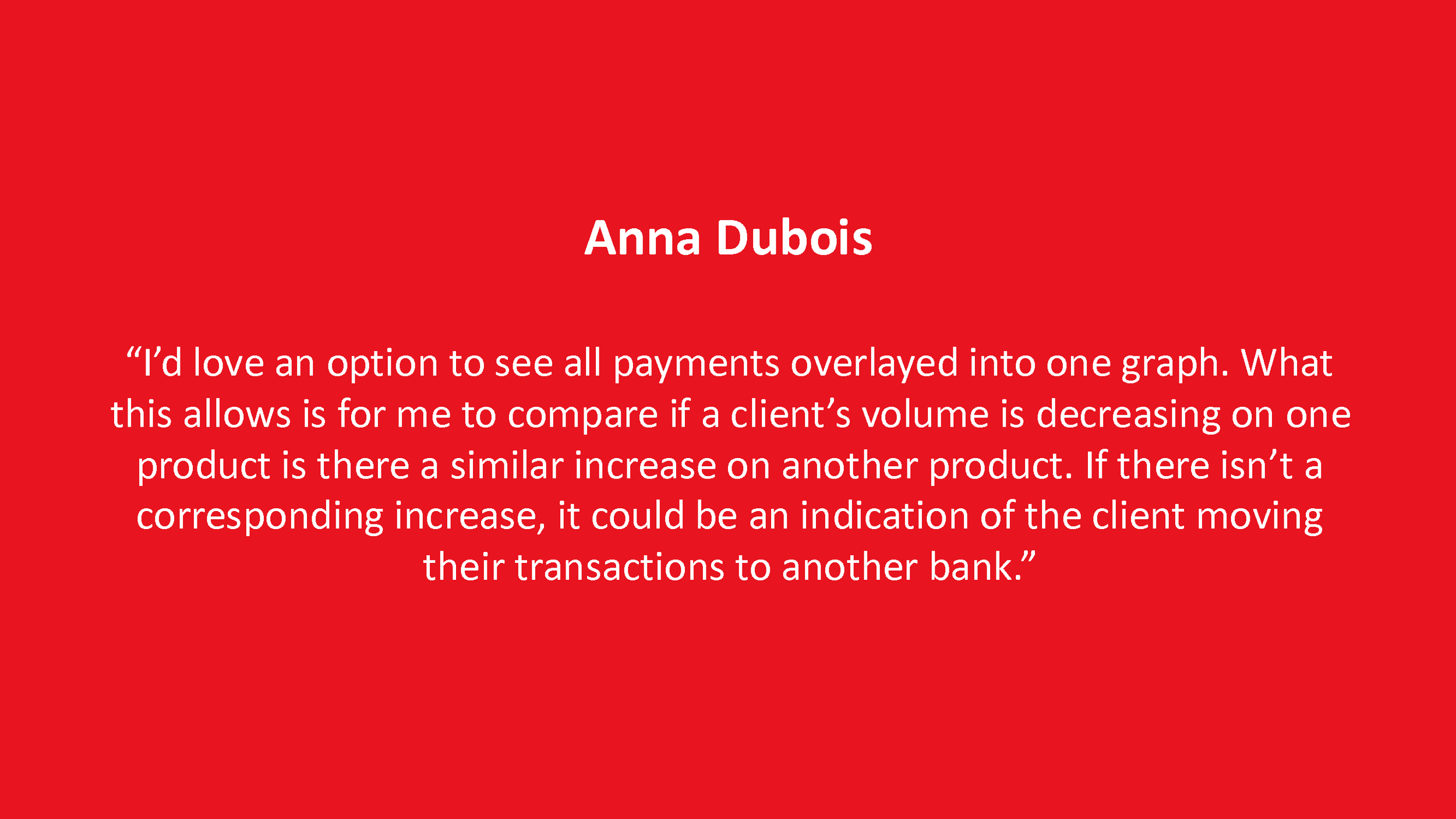
If associates notice a shift in any of these areas, it would incentivize them to reach out to the primary business contacts to investigate and make concessions to prevent clients from moving their business elsewhere. These concessions can be in the form of repricing their existing service subscriptions, offering a new product, or upgrading their service tier to meet their needs.
Creating the user persona and understanding the existing workflow was key to designing a solution centered around their desired need to stay on top of their clients and deliver a positive outcome.
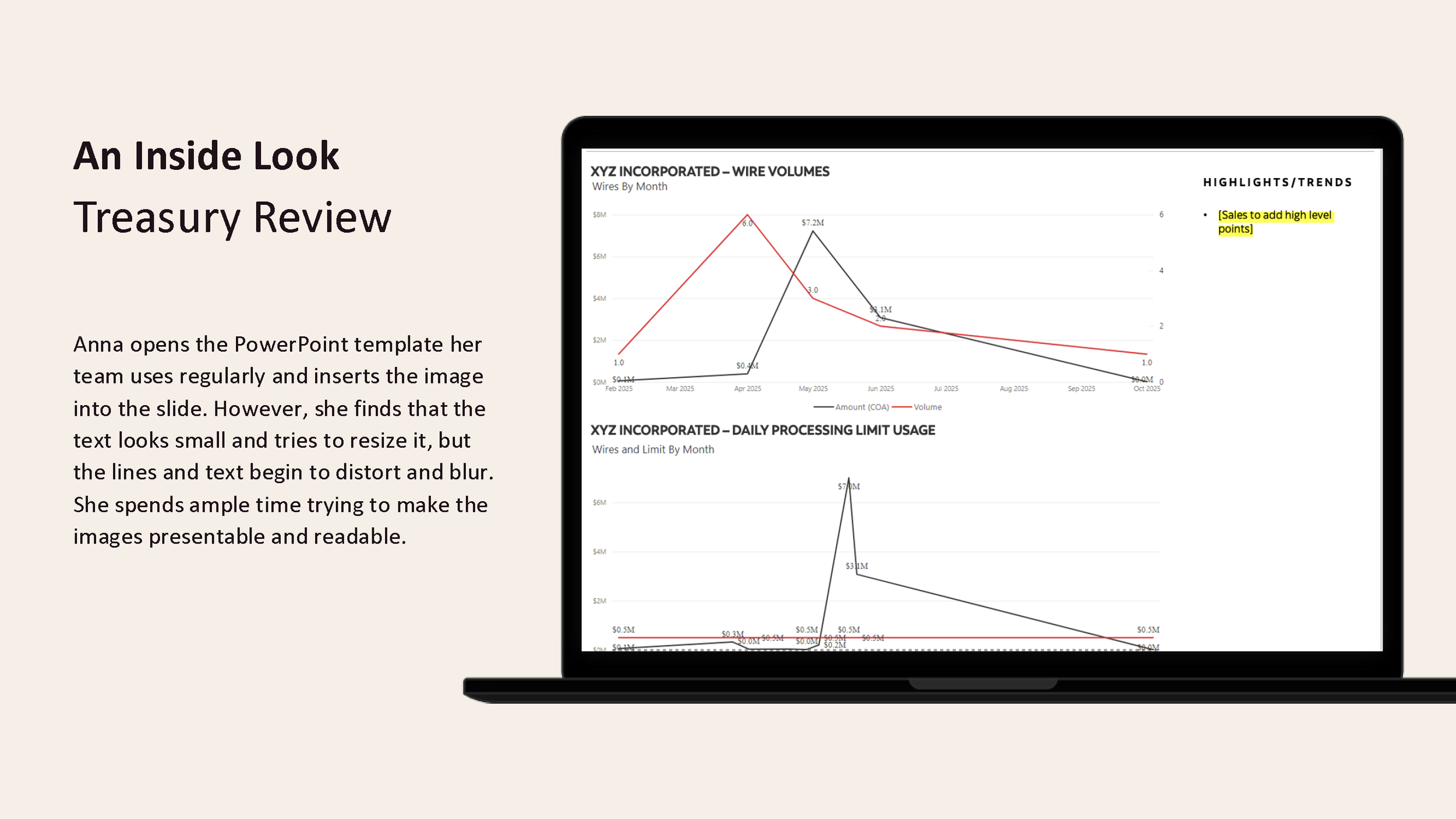
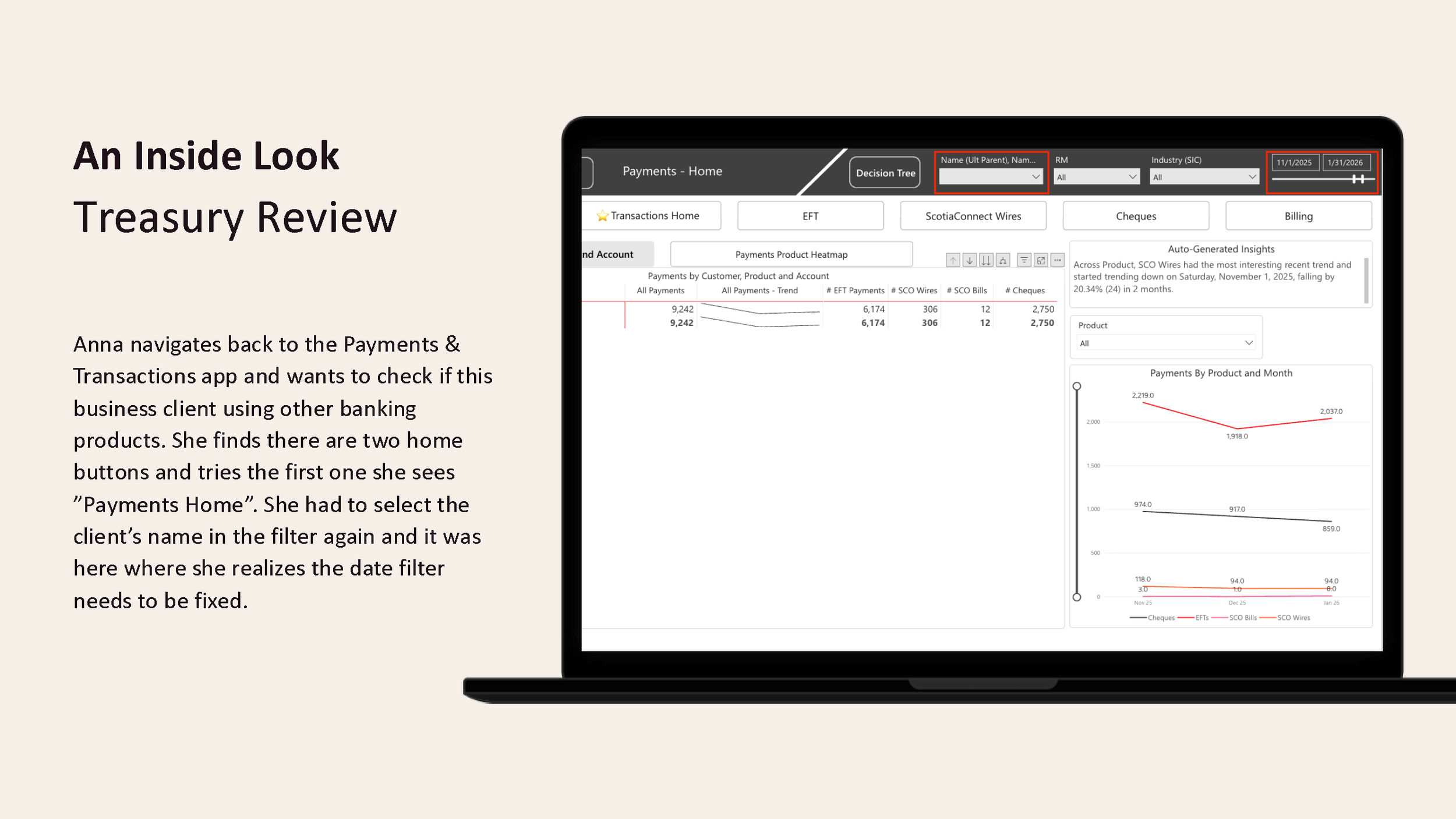
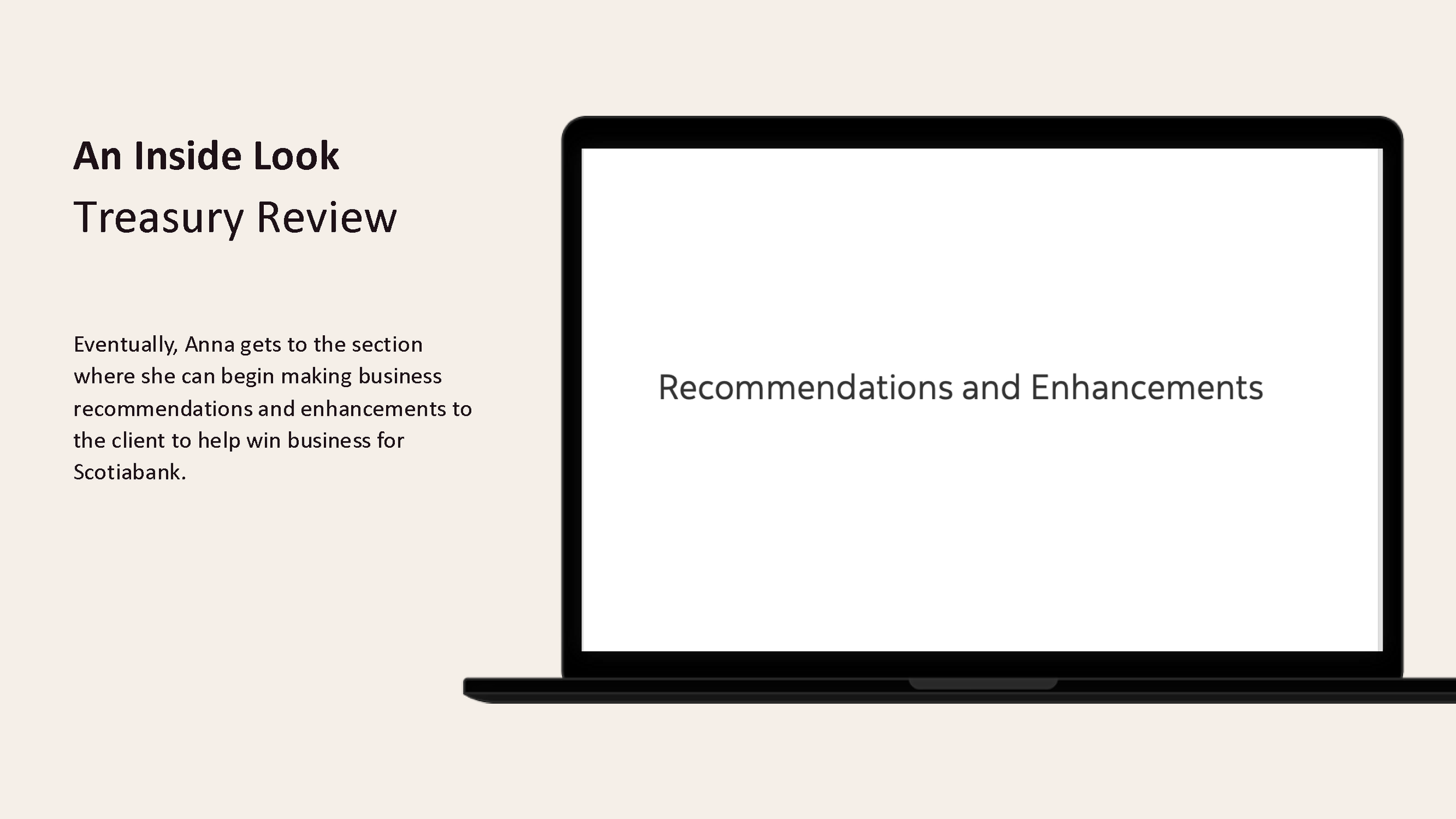
Brainstorming
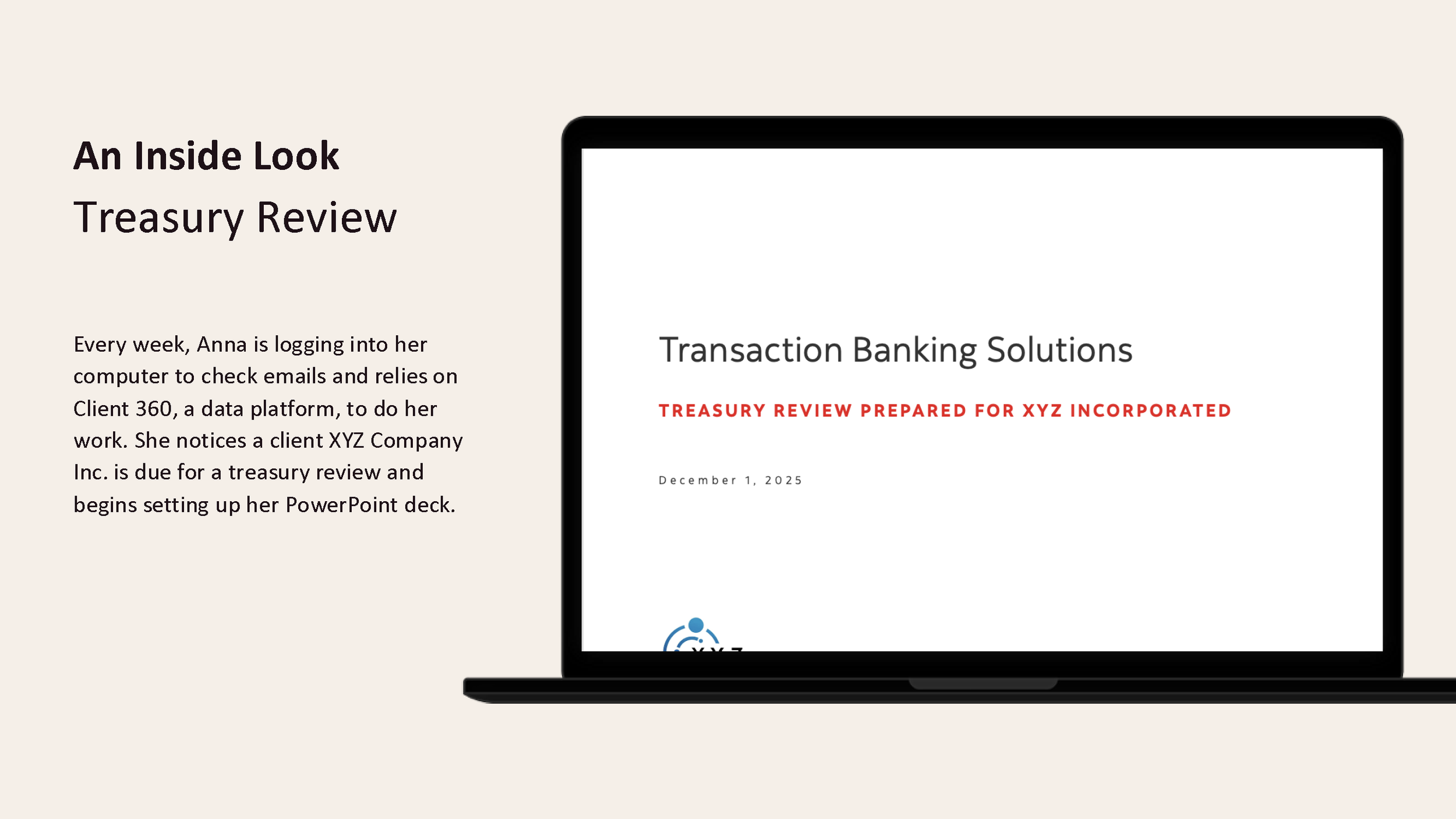
Sales associates have access to a PowerPoint template that includes a list of active products and their monthly usage, colloquially known as a treasury review. They share this information with clients to start a conversation around how their company is doing by observing where their money is going and if there are ways to improve their cash flow experience with Scotiabank.
This is often the most time-consuming part of their job as it requires them to navigate through various data platforms to get all this information, including which products they’re using, the transaction volumes & amounts, and their deposit balances. All of this information gives them a holistic view of their client’s needs to pitch sales opportunities.
Employees expressed digital burnout as they were exhausted from having to look at screens all day instead of talking to clients, and some of these treasury reviews took up to 10 business days to complete due to the number of clicks and channels to verify the information accuracy. The worst case scenario was misinforming a business client using wrong numbers, which would challenge the competency of Scotiabank being a trusted financial partner.
Gathering what I learned, I mapped out all the steps leading up the client meeting starting from the moment they log into their assigned workstation. This change management exercise gave me insight into where and how the digital solution would integrate into the existing business process, so that it offers the best chance of achieving the desired change outcome.
Awareness & Desire for Change
The key to the success of the project was making the leadership team aware of the problem and the kind of change I propose. This included sharing the user persona, outlining the business process from the user research, designing mockups of the digital solution, explaining the proposed change in process to executive management, and helping them understand the time and monetary benefits of this project. The savings are projected to help employees reclaim up to 90% of their time (a total of 33,885 hours for a team of 20) and reinvesting up to $990,000 in salary value from administrative lag towards revenue generation.
Annualized Comparison of Legacy vs. Optimized Processes
Designing the Solution
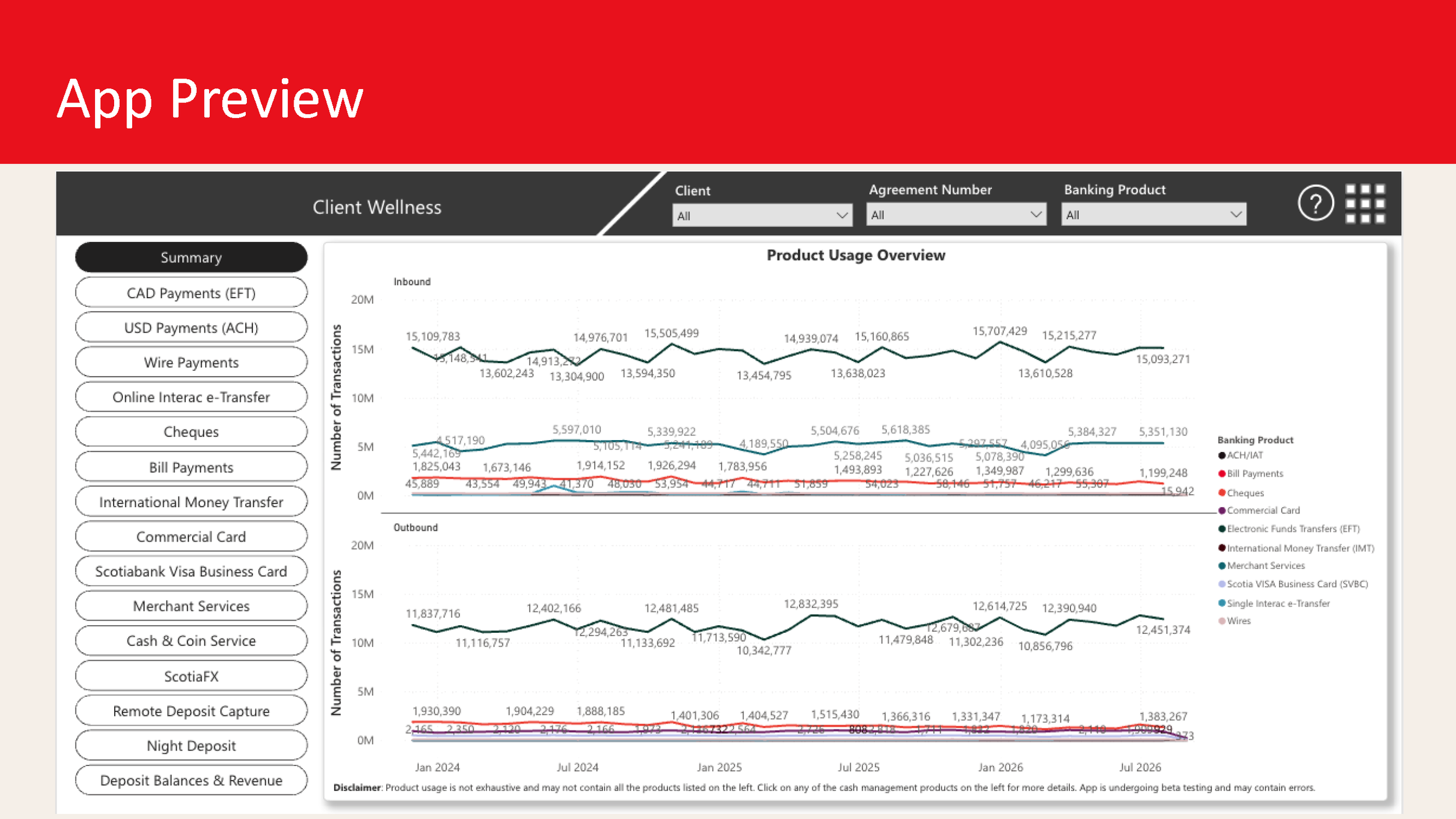
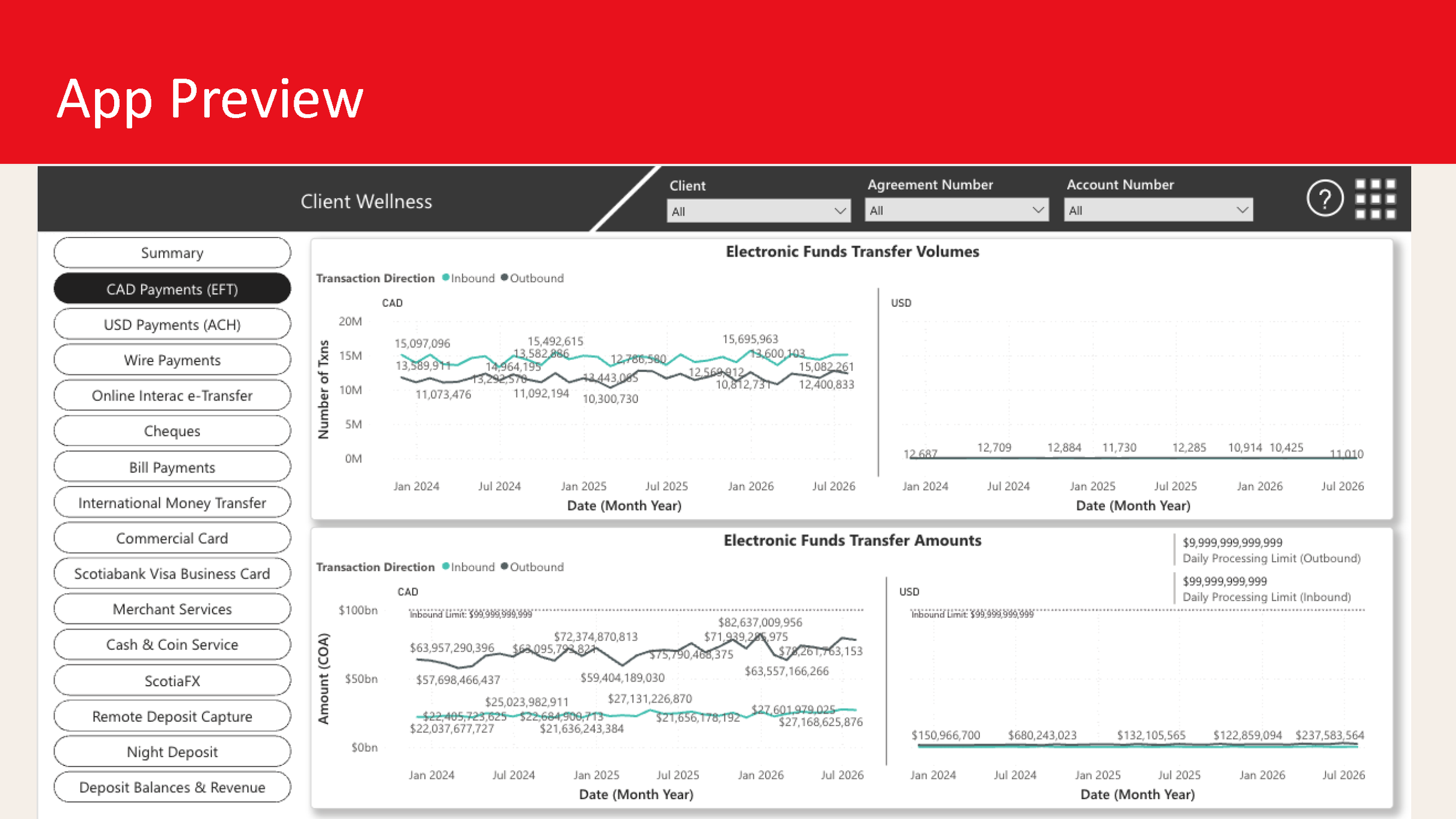
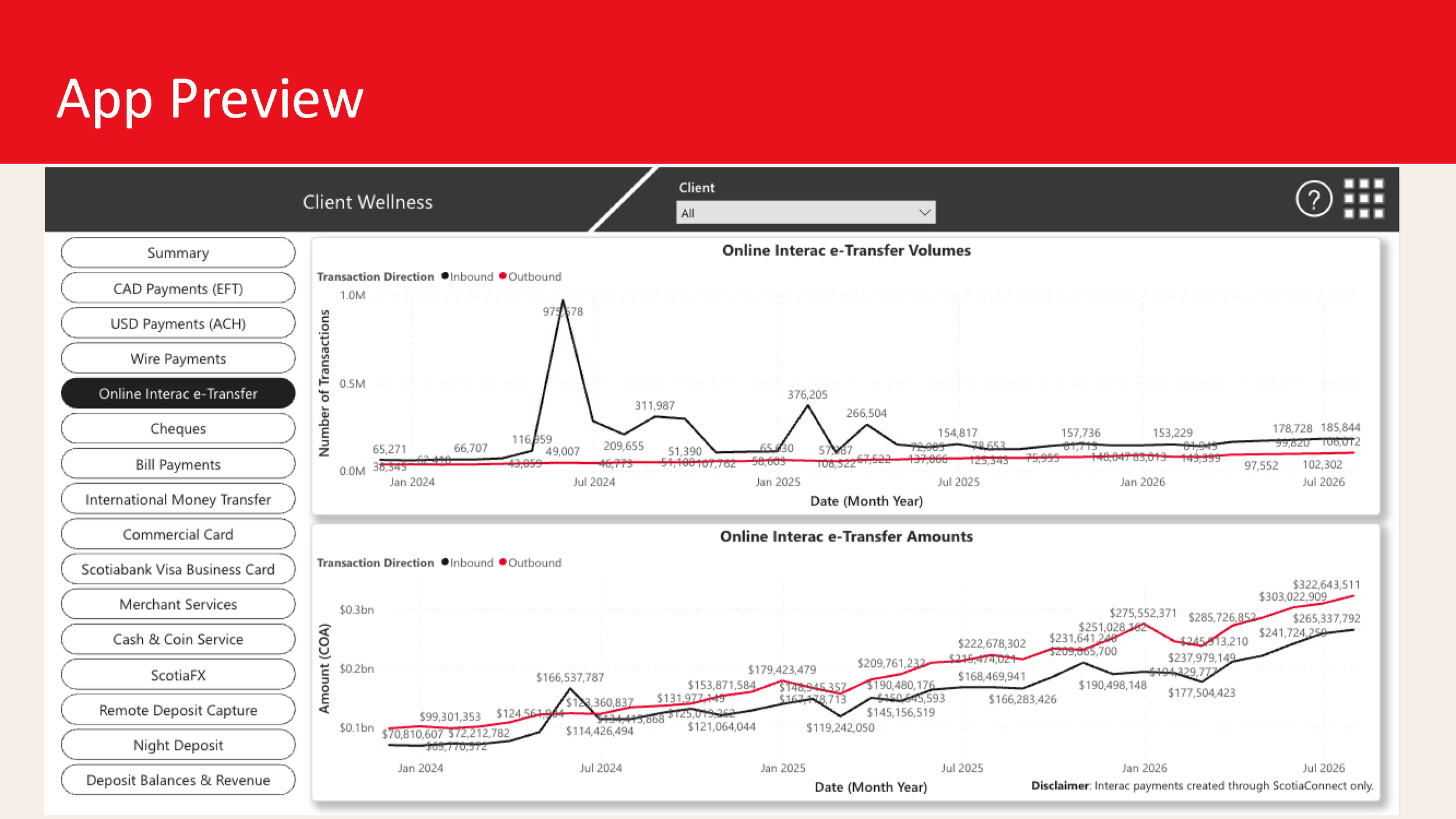
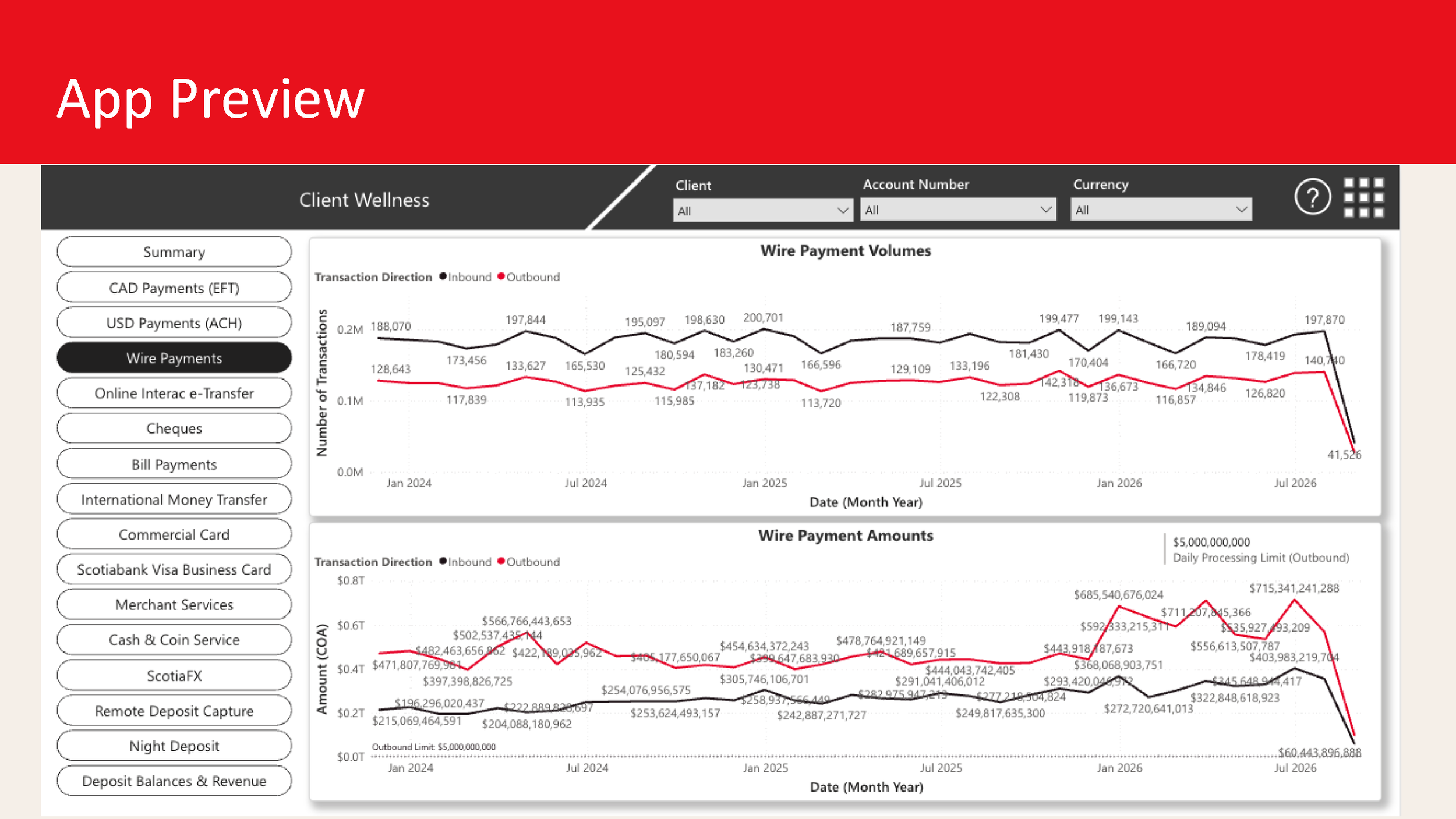
By understanding how the sales associates execute their task to compile the presentation deck to pitch opportunities to clients, I was able to design a layout and replicate it across different products & services offered by Scotiabank. Employees preferred to have some consistency in how the information is displayed, namely showing the transaction volumes, amounts, and daily processing limits, where applicable.
The last piece of information was key for sales associates as it gives them an idea of how often the client is breaching their daily processing limits, which causes sensitive payments to get blocked leading to banking friction and operational risk for the business. As a proactive measure, sales associates are incentivized to identify and fix these breaches in credit early to reduce the risk of losing business from their clients banking with the financial institution.
The design prototype was tested out against a dozen employees across different departments to get feedback on the navigation and accuracy of the data visualized. There was a 92% approval rating (11/12) amongst employees, with one employee citing feedback on the duplication of efforts with existing tools and platforms. This insight created the groundwork on the change management strategy to launch and adopt the newly designed application.
Enablement Strategy (Knowledge & Ability)
With leadership support and feedback from sales associates, I was able to construct a simple table visualizing the differences between an existing application (e.g., Payments & Transactions) and the new application (e.g., Client Wellness) being introduced into their work flow. The vision for the leadership team was to have employees move away from the existing application with the intention of eventually decommissioning it.
At the same time, employees didn’t want lose access to visuals within the existing application that are used in rare instances (e.g., Product Heat Map, ScotiaConnect Billing). Balancing between these perspectives was important to help employees prepare for the upcoming change.
Using the built-in usage metrics within Power BI service and collecting qualitative feedback from employees about these existing pages, we found that not many users were accessing the Product Heat Map and ScotiaConnect Billing sections of the existing application (1-2 sites visits per month). This didn’t mean that they weren’t useful in any way, but rather that the information can be found through alternative avenues if employees needed to present this information to their client at the meeting.
For example, the Product Heat Map can be found in the Summary page of the Client Wellness app and personalized by the user into another data visual type if desired (e.g., heat map, table, pie chart, etc.). The ScotiaConnect Billing can still be accessed through Payments & Transactions, or by reviewing the business client’s account statements. Recognizing and sharing these approaches to the frontline sales teams was paramount to ensure they can confidently navigate to where they need to go within the data platform.
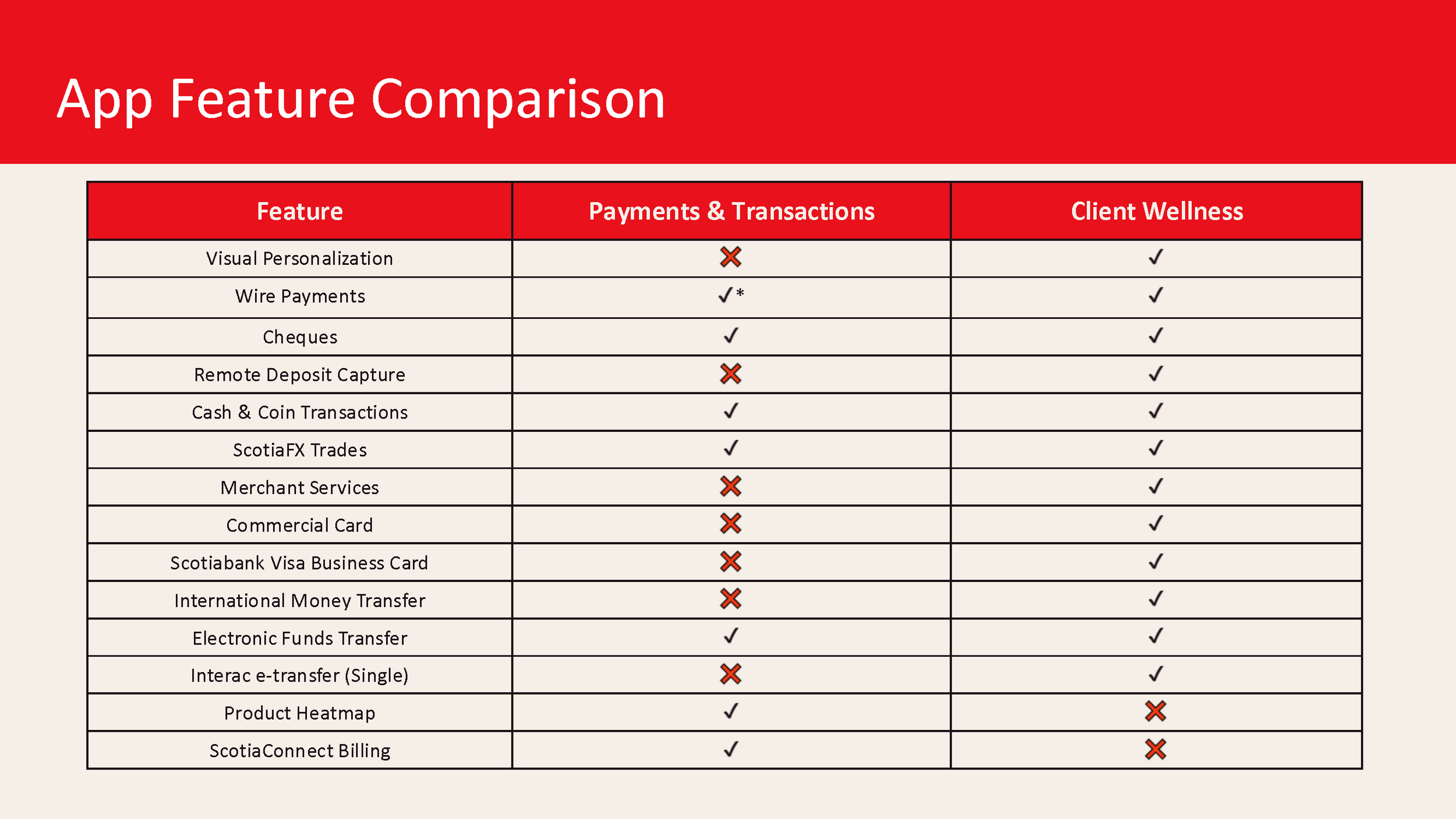
Availability of Products & Services within Each Application
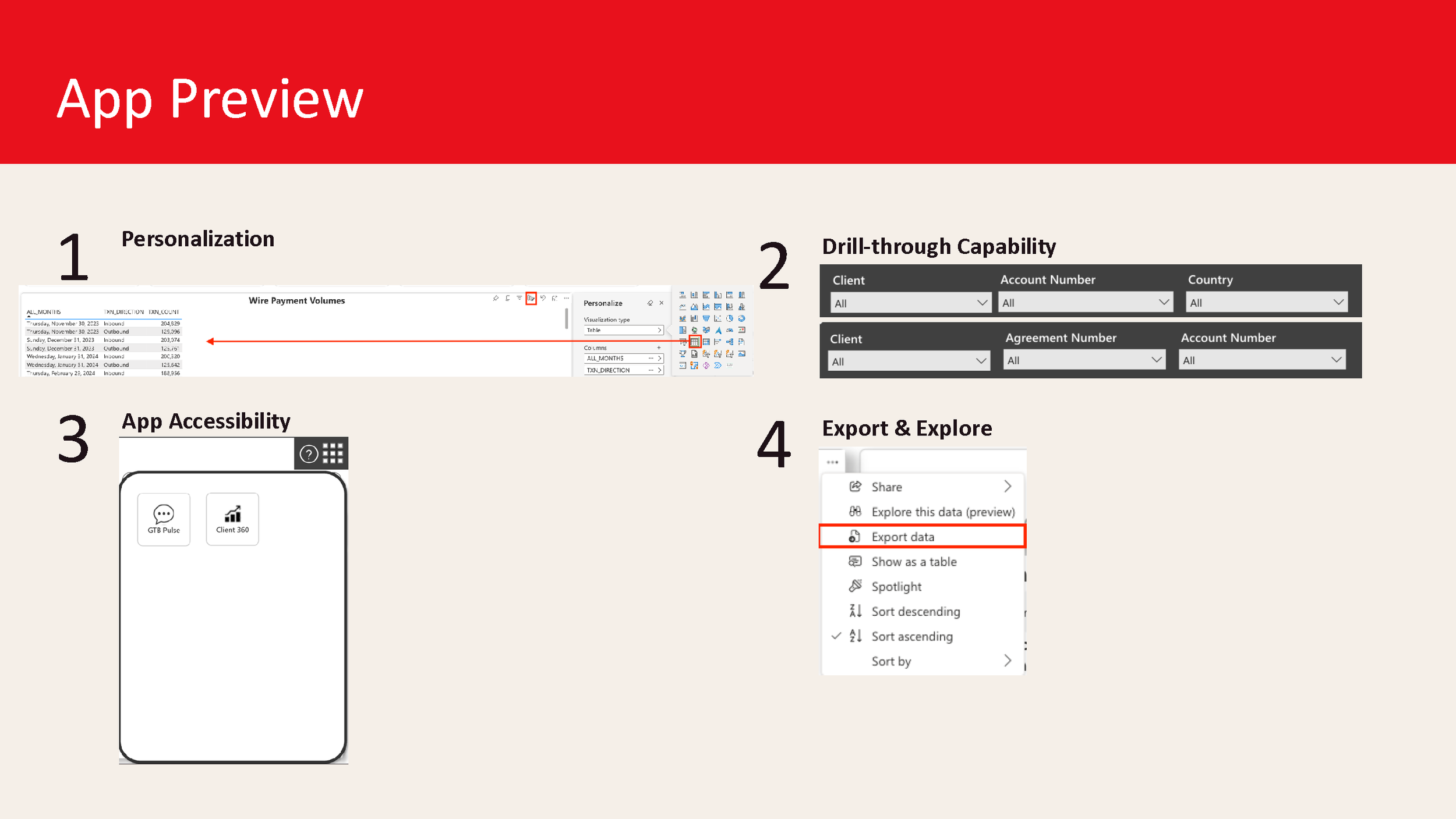
Introducing New Features Included Within the New Application
Once we acquired the knowledge and approach, it was time to set up the team meetings to explain the change to the frontline sales teams. Consulting with the leadership team, they wanted to have this tool made available to everyone in North America (Canada, United States). Even though it was originally designed for the small team of 20 sales associates, the mandate was expanded to include other groups of sales. Recognizing this, I came up with a learning program that included a user guide, a short-form training video, and a tutorial exercise to practice navigating the application. After completing the training, a certificate of completion and recognition would be sent out.
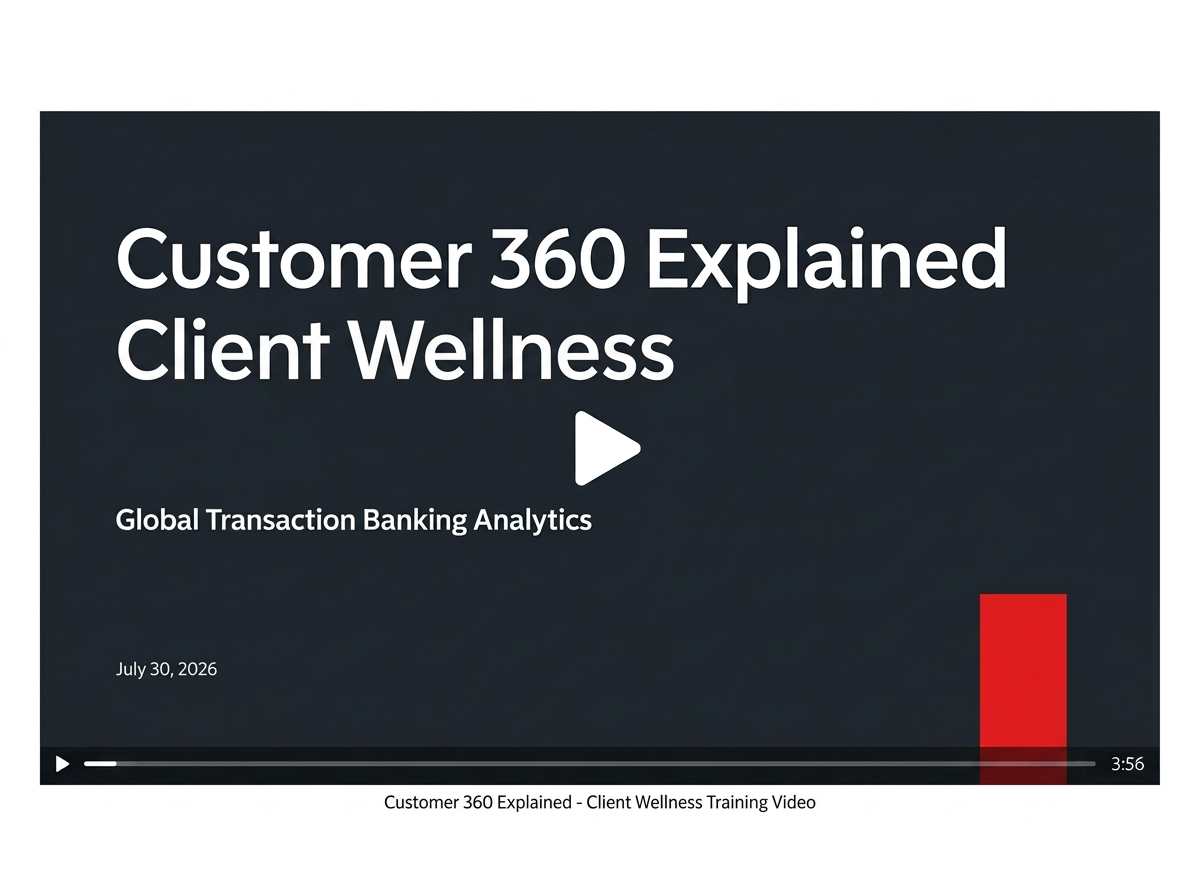
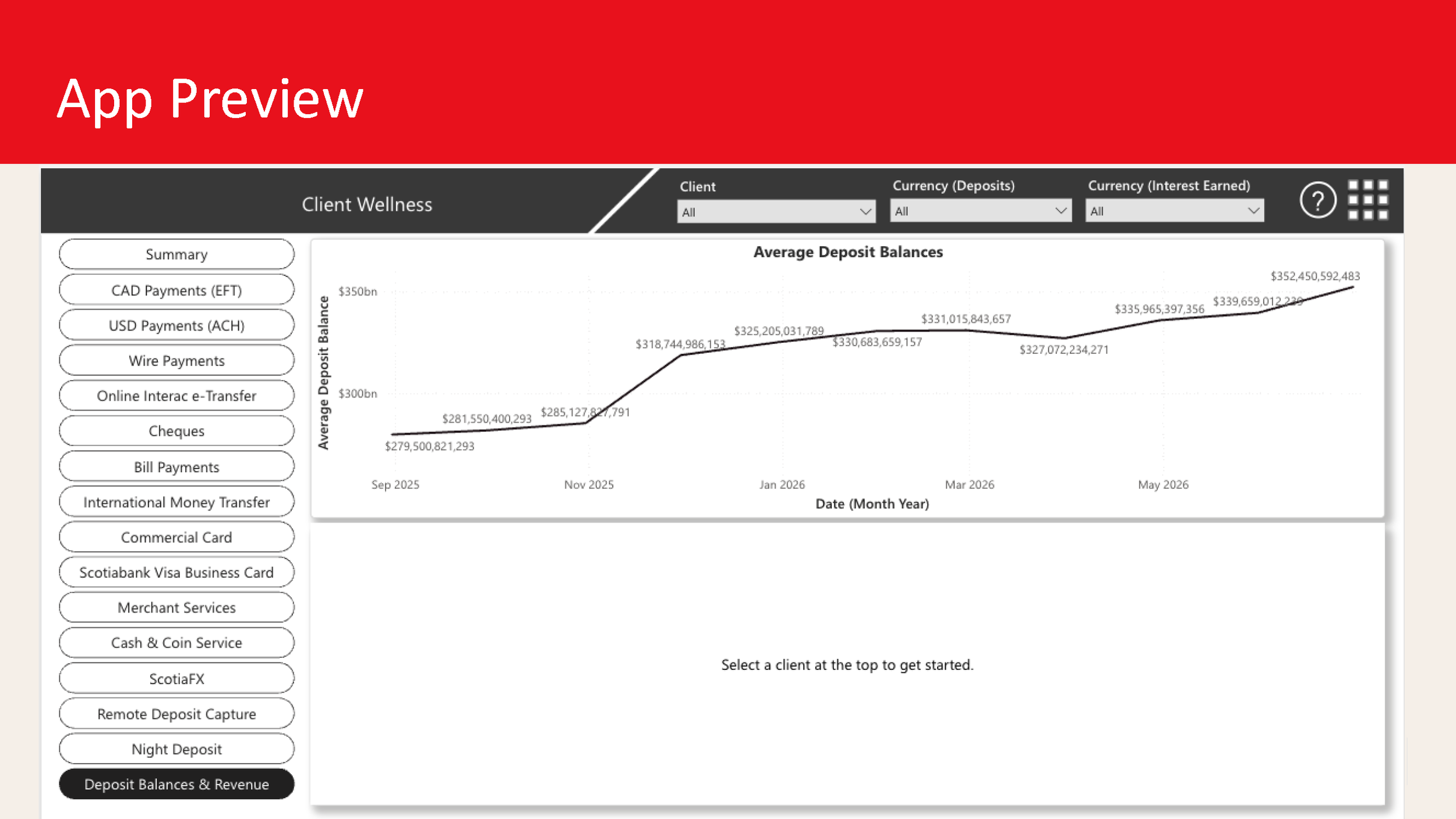
Thanks to earlier user research and testing the application against a variety of sales associates ranging from Small Business Advisors to Corporate Banking Officers, I was able to capture the similarities and differences in their perspectives and use cases of it. In addition, this opened an opportunity to help iterate the design to incorporate their design requirements into the subsequent build to expand its usage over time. Examples include adding Account Deposits & Balances within the new application, a requirement not often needed when covering small businesses (e.g., business banking), but relevant for mid-market (e.g., commercial) and enterprise (e.g., corporate) businesses.
Following the launch of the application, we were hitting over 100 visits per day. The number of treasury reviews completed were beginning to pick up, allowing a sales associate to work on up to 10 at a time (50% increase).
